
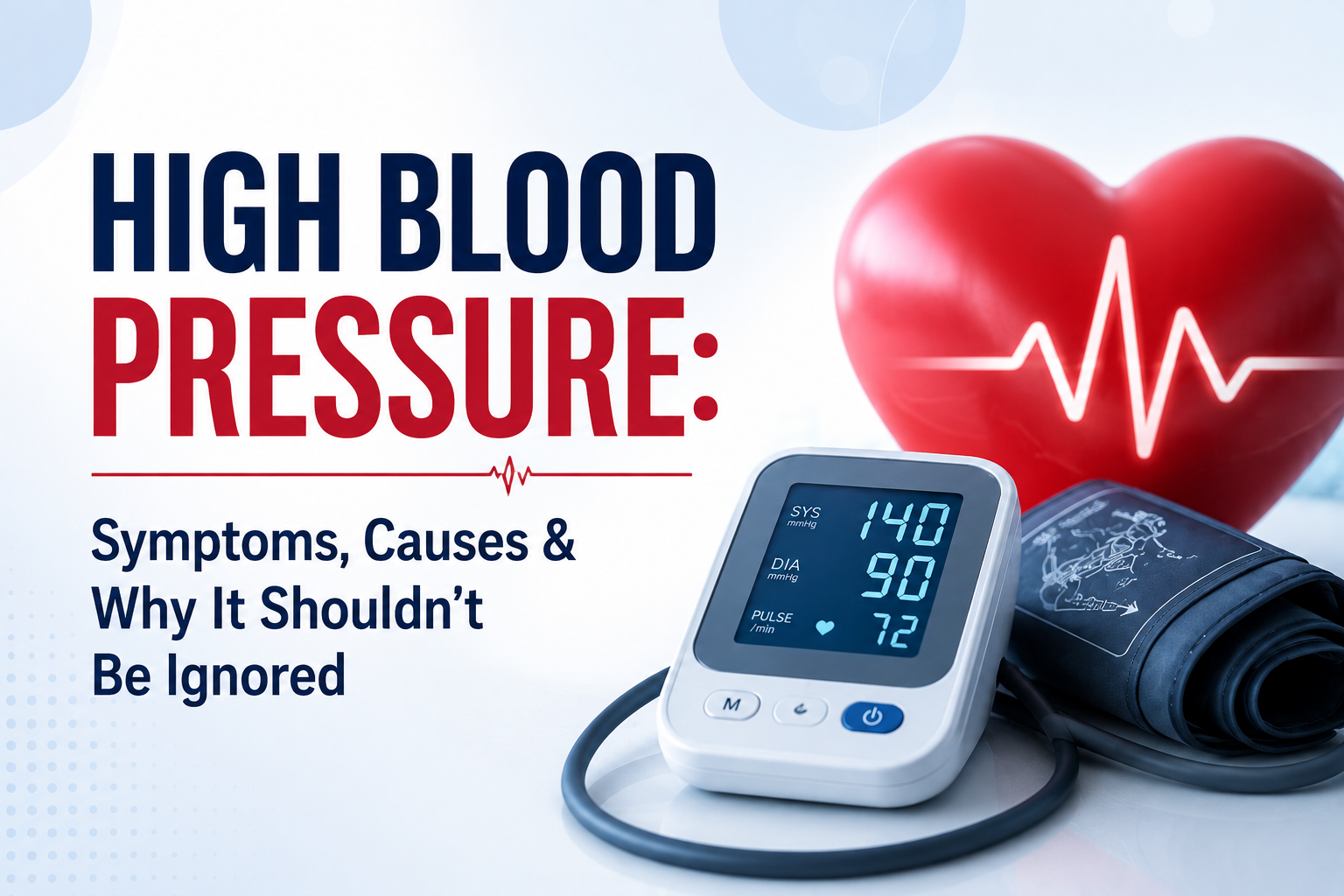
High Blood Pressure: Symptoms, Causes & Why It Shouldn’t Be Ignored
- The Pitch Point
- 29 Jul 2026
High blood pressure, also known as hypertension, is one of the most common health conditions in adults. What makes it particularly concerning is that it often develops without obvious symptoms.
A person can have high blood pressure for years without feeling unwell while the condition gradually places extra strain on the heart, brain, kidneys and blood vessels.
That is why high blood pressure is often called a “silent” condition.
The good news is that hypertension can usually be detected through a simple blood pressure measurement, and appropriate lifestyle changes and medical treatment can significantly reduce the risk of complications.
What Is High Blood Pressure?
Blood pressure is the force of blood pushing against the walls of your arteries as your heart pumps blood around your body.
A blood pressure reading has two numbers:
- Systolic pressure: the pressure when the heart contracts.
- Diastolic pressure: the pressure when the heart relaxes between beats.
Blood pressure can vary throughout the day depending on activity, stress, sleep and other factors. A diagnosis of hypertension is generally based on repeated measurements, rather than a single high reading.
Your doctor can interpret your readings based on your overall health and individual risk factors.
Does High Blood Pressure Cause Symptoms?
Often, no.
Many people with hypertension feel completely normal.
This is one of the main reasons regular blood pressure checks are important. Waiting for symptoms before checking your blood pressure may allow the condition to remain undetected for a long time.
When blood pressure becomes very high, some people may experience symptoms such as:
- Severe headache
- Dizziness
- Blurred vision
- Shortness of breath
- Chest discomfort
- Nausea
- Confusion
However, these symptoms are not specific to high blood pressure and should not be used to determine whether your blood pressure is normal.
The only reliable way to know your blood pressure is to measure it.
What Causes High Blood Pressure?
In many adults, there isn’t one single identifiable cause. This is known as primary hypertension.
Several factors can increase the risk of developing high blood pressure.
1. High Salt Intake
A diet high in sodium can contribute to increased blood pressure in some people.
Processed foods, packaged snacks, pickles, sauces and other foods can contain significant amounts of sodium.
Reducing excess salt intake is an important part of maintaining healthy blood pressure.
2. Being Overweight or Obese
Excess body weight can increase the workload on the heart and may contribute to higher blood pressure.
Maintaining a healthy weight through balanced nutrition and regular physical activity can help manage blood pressure.
3. Physical Inactivity
Regular physical activity supports cardiovascular health and can help control blood pressure.
Long periods of inactivity may increase the risk of hypertension and other cardiovascular conditions.
4. Stress
Long-term stress can affect behaviours and biological processes that influence blood pressure.
Stress management alone cannot replace medical treatment, but healthy ways of managing stress can form part of an overall heart-health plan.
5. Smoking and Tobacco Use
Tobacco use can damage blood vessels and increase cardiovascular risk.
Quitting smoking is one of the most important steps a person can take to protect their heart and blood vessels.
6. Alcohol Consumption
Excessive alcohol intake can contribute to high blood pressure and other health problems.
Limiting alcohol consumption can be beneficial for cardiovascular health.
7. Family History and Age
The risk of hypertension generally increases with age, and having close family members with high blood pressure can also increase your risk.
This makes regular monitoring particularly important for people with a family history of hypertension.
Can Other Medical Conditions Cause High Blood Pressure?
Yes.
Some cases of hypertension are caused by another underlying condition. This is called secondary hypertension.
Possible causes include:
- Kidney disease
- Hormonal disorders
- Sleep apnea
- Certain medications
- Problems affecting the blood vessels supplying the kidneys
If blood pressure is unusually high, develops suddenly or is difficult to control despite treatment, your doctor may investigate whether an underlying condition is contributing to it.
Why Is High Blood Pressure Dangerous?
High blood pressure can gradually damage the walls of arteries and place additional strain on the heart.
Over time, uncontrolled hypertension can increase the risk of serious health problems.
Heart Disease
High blood pressure makes the heart work harder and can contribute to conditions such as coronary artery disease and heart failure.
Heart Attack
Damage to the arteries associated with high blood pressure can increase the risk of heart attack.
Stroke
Hypertension is one of the major risk factors for stroke. It can damage blood vessels in the brain and contribute to blood vessel blockage or rupture.
Kidney Disease
The kidneys contain a network of delicate blood vessels that can be damaged by prolonged high blood pressure.
Hypertension can both contribute to kidney disease and become harder to control as kidney function declines.
Vision Problems
High blood pressure can damage blood vessels in the eyes and, in severe cases, affect vision.
Other Vascular Problems
Long-term hypertension can contribute to damage throughout the body’s blood vessels, increasing overall cardiovascular risk.
Can High Blood Pressure Be Prevented?
Not every case of hypertension can be prevented, particularly when age, genetics or certain medical conditions are involved.
However, several lifestyle habits can help reduce your risk:
- Maintain a healthy weight.
- Exercise regularly.
- Eat a balanced diet rich in vegetables, fruits and whole foods.
- Reduce excess salt.
- Avoid tobacco.
- Limit alcohol.
- Get adequate sleep.
- Manage stress.
- Have your blood pressure checked regularly.
These habits are also important for people who already have hypertension.
How Is High Blood Pressure Diagnosed?
Blood pressure is measured using a blood pressure monitor.
Your doctor may recommend taking multiple readings over time because blood pressure naturally changes throughout the day.
In some cases, home blood pressure monitoring or ambulatory blood pressure monitoring may be recommended to provide a better picture of your usual blood pressure.
Your doctor may also recommend blood and urine tests or other investigations to assess cardiovascular risk and look for possible underlying causes or complications.
What Happens If You Are Diagnosed With Hypertension?
Treatment depends on how high your blood pressure is, your overall cardiovascular risk and whether you have other medical conditions.
Your doctor may recommend lifestyle changes and, when appropriate, blood pressure-lowering medication.
There are several types of medicines used to treat hypertension. The right medication depends on the individual patient.
If you are prescribed blood pressure medicine, take it exactly as directed and do not stop it suddenly without speaking with your doctor.
When Is High Blood Pressure an Emergency?
A very high blood pressure reading accompanied by concerning symptoms can require immediate medical attention.
Seek urgent medical care if you have a very high reading along with symptoms such as:
- Chest pain
- Severe shortness of breath
- Severe headache
- Confusion
- Weakness or numbness
- Difficulty speaking
- Sudden vision changes
- Loss of consciousness
These symptoms can indicate a serious cardiovascular or neurological problem and should not be ignored.
How Often Should You Check Your Blood Pressure?
The appropriate frequency depends on your age, health and previous blood pressure readings.
People with normal readings may need periodic screening, while those with hypertension may need more frequent monitoring.
If you have diabetes, kidney disease, cardiovascular disease or a family history of hypertension, your doctor may recommend closer monitoring.
A simple blood pressure check can provide valuable information about your cardiovascular health.
The Bottom Line
High blood pressure may not make you feel sick—but it can still cause serious damage over time.
Because hypertension often has no noticeable symptoms, regular blood pressure checks are one of the simplest ways to identify the condition early.
If your blood pressure is consistently elevated, don’t ignore it. Early evaluation, healthy lifestyle changes and appropriate treatment can help reduce the risk of heart disease, stroke, kidney problems and other complications.
Consult a Physician or Cardiologist at Kuber Hospital
If you have consistently high blood pressure, unexplained cardiovascular symptoms or risk factors for hypertension, consult a qualified doctor for an appropriate evaluation.
At Kuber Hospital, the medical and cardiology teams can help assess your blood pressure, identify possible risk factors and guide you toward appropriate management.
Don’t wait for symptoms to check your blood pressure. Know your numbers, understand your risk and take action for your heart health.
This article is intended for general educational purposes and does not replace a medical consultation. Blood pressure targets and treatment decisions should be individualized by a qualified healthcare professional.
Related News

Aging Gracefully: Gynecological Care After 50
Turning 50 is a milestone worth celebrating—a time of wisdom, experience, and new possibilities. But as your body evolves, so do your health needs, especially when it comes to gynecological care. Menopause, bone health, and sexual wellness take center stage, and staying proactive can make all the difference in aging gracefully. At Kuber Hospital & … Continue reading "Aging Gracefully: Gynecological Care After 50"
Read More

All About Allergies: Triggers, Symptoms & Management
Allergies are a common yet often misunderstood medical condition that can range from mild discomfort to life-threatening reactions. Understanding what causes allergies, how to recognize the symptoms, and the best ways to manage them can help you or your loved ones lead a healthier, more comfortable life. At Kuber Hospital & Urology Center, our experienced … Continue reading "All About Allergies: Triggers, Symptoms & Management"
Read More
Happy Patients!
Hear from our patients

I had the privilege of experiencing the outstanding care provided by the hospital staff during the recent visit. The team is truly exceptional—professional, compassionate, and attentive to every detail. Their dedication to patient well-being is evident in the way they go above and beyond to ensure comfort and support at all times.

JAGJOT KAUR
Patient
Very good hospital and they provide us good facilities and best treatment , staff is also very cooperative with us. Dr Meenakshi mam is very good in nature and very helpful and she also guide us during the whole journey of my pregnancy
Satish Dagar
Patients Family
Very good hospital, treatment of my father in law stone removal from kidney surgery was successful he is fit and fine. Released within two days. Reception mam davinder was very friendly and supportive. And overall staff behaviour is very good. Hospital is clean an proper hygiene is maintained. All required protocal are being followed.
Amrit Pandey
Patient
My experience is very wonderful. all nurse are very good & very wonderful. I like the sister biji banti and rinki the most. Dr Meenakshi has treated myself very well and given me very support in my full pregnancy period……
Thank you all staff & Dr Meenakshi so much
Manya Aggarwal
Patient
Experience here was superb. Kuber hospital serves and take care of their patients really well. Five stars for the treatment and Five stars for after surgery care.
Nishchal Joshi
Patient