
Blood in Urine: Causes, Warning Signs & When It Needs Urgent Attention
- The Pitch Point
- 18 Jul 2026
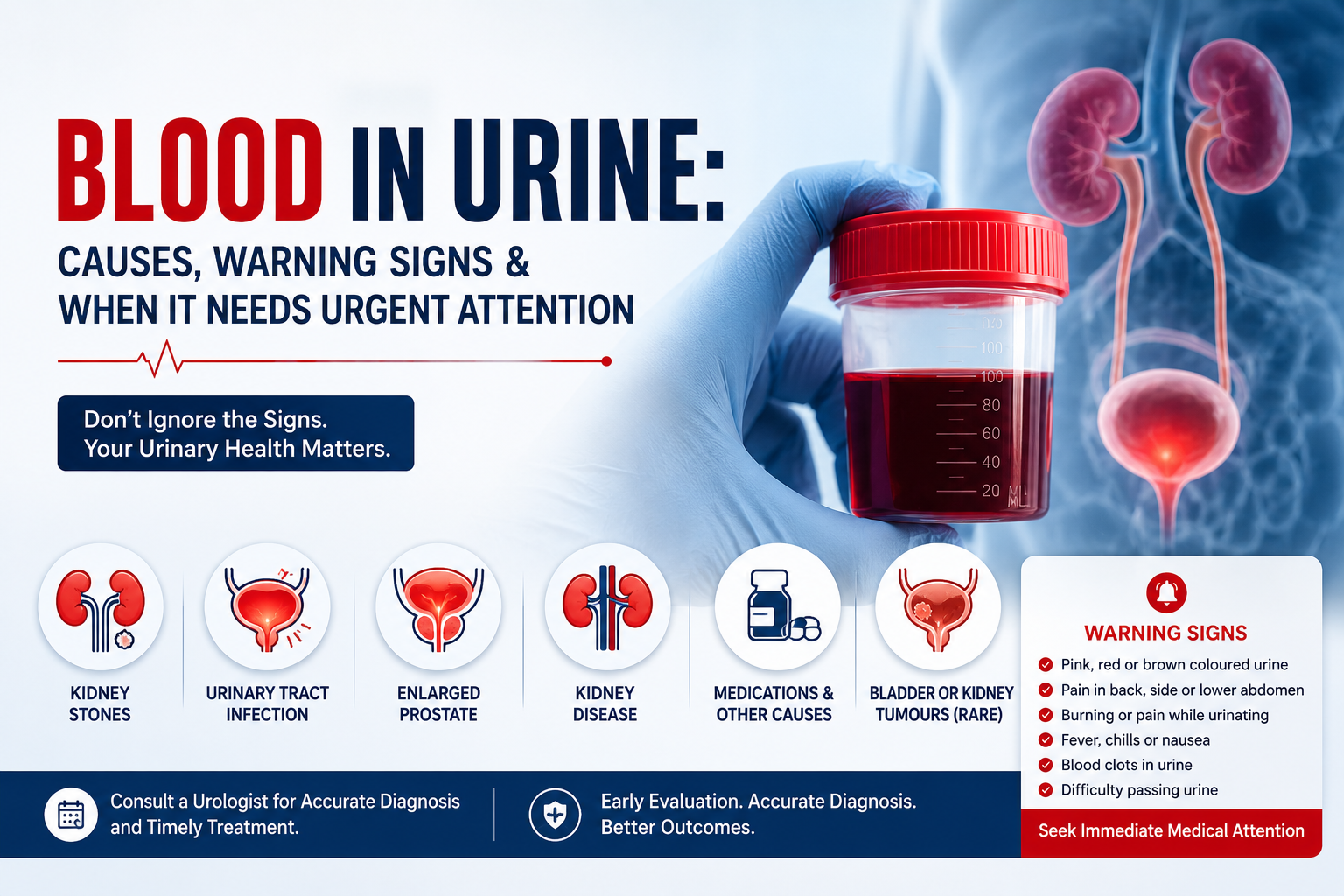
Seeing blood in your urine can be alarming. Sometimes the amount is so small that it can only be detected through a urine test. In other cases, the urine may appear pink, red or dark brown.
Blood in urine is known medically as hematuria. While it can sometimes be caused by a relatively minor condition, it can also be a warning sign of a problem involving the kidneys, bladder, prostate or urinary tract.
Blood in urine should never be ignored, particularly when it appears without an obvious explanation.
What Does Blood in Urine Mean?
Blood in urine occurs when red blood cells enter the urinary system.
There are two main types:
1. Visible Blood in Urine
This is called gross hematuria. You may notice that your urine looks:
- Pink
- Red
- Reddish-brown
- Dark brown or tea-colored
Even a small amount of blood can significantly change the colour of urine.
2. Blood Detected Through Testing
This is known as microscopic hematuria. The urine may look completely normal, but red blood cells are detected during a urine examination.
Both types require appropriate medical evaluation to determine the cause.
What Causes Blood in Urine?
Blood can enter the urine from different parts of the urinary system, including the kidneys, ureters, bladder, urethra and, in men, the prostate.
Some common causes include:
1. Kidney Stones
Kidney or urinary stones can irritate and damage the lining of the urinary tract, resulting in blood in the urine.
Blood may occur along with:
- Severe pain in the side or back
- Pain that moves toward the lower abdomen or groin
- Nausea or vomiting
- Burning while urinating
- Frequent urination
The amount of blood does not necessarily indicate how serious the underlying problem is.
2. Urinary Tract Infection
A urinary tract infection (UTI) can cause inflammation and irritation of the urinary tract.
Other symptoms may include:
- Burning or pain while urinating
- Frequent urge to urinate
- Urinary urgency
- Lower abdominal discomfort
- Cloudy or strong-smelling urine
- Fever in some cases
A doctor can determine whether an infection is present through appropriate testing.
3. Enlarged Prostate
In men, benign prostatic hyperplasia (BPH) can sometimes be associated with blood in the urine.
An enlarged prostate may also cause:
- Difficulty starting urination
- Weak urine flow
- Frequent urination
- Waking frequently at night to urinate
- A feeling that the bladder has not completely emptied
These symptoms can have several causes, so proper evaluation is important.
4. Kidney Conditions
Certain kidney conditions can cause blood to leak into the urine.
This may occur with other symptoms such as swelling, changes in urine output, high blood pressure or abnormal kidney function.
If blood in urine persists or is detected repeatedly, your doctor may recommend tests to evaluate kidney health.
5. Injury or Trauma
An injury to the kidneys or urinary tract can result in blood in the urine.
This may occur following an accident, sports injury or other significant trauma.
6. Certain Medicines or Medical Procedures
Some medicines can increase the likelihood of bleeding, while certain medical procedures involving the urinary tract can temporarily cause blood in urine.
If you notice blood after starting a medication or following a procedure, inform your doctor rather than stopping prescribed medication on your own.
7. Urinary Tract Tumours or Cancer
Blood in urine can sometimes be an early warning sign of cancer involving the urinary system, including the bladder or kidney.
Importantly, urinary cancers may cause painless blood in the urine.
This does not mean that every case of blood in urine is cancer. Most causes are not cancerous. However, unexplained or persistent blood—especially visible blood—should be evaluated by a doctor.
Is Blood in Urine Always Painful?
No.
Blood in urine may occur with significant pain, particularly with conditions such as kidney stones or urinary infections.
However, painless blood in urine can also occur.
This is one reason why you should not wait for pain to develop before seeking medical advice.
When Is Blood in Urine an Emergency?
Seek urgent medical attention if blood in urine is accompanied by symptoms such as:
- Inability to pass urine
- Heavy or persistent bleeding
- Large blood clots in the urine
- Severe abdominal, side or back pain
- High fever or chills
- Dizziness, weakness or fainting
- Blood in urine following a significant injury
Blood clots can sometimes obstruct the flow of urine and require prompt medical treatment.
When Should You See a Urologist?
You should arrange a medical evaluation if:
- You can visibly see blood in your urine.
- Blood is detected during a urine test.
- Blood appears repeatedly.
- You have unexplained blood without pain.
- You have urinary symptoms such as weak urine flow or difficulty urinating.
- You have recurrent urinary infections.
- You have a history of kidney or urinary tract problems.
A urologist can assess whether the bleeding is coming from the kidneys, ureters, bladder, prostate or another part of the urinary system.
How Is Blood in Urine Diagnosed?
Your doctor will first ask about your symptoms, medical history, medications and any recent injuries or procedures.
Depending on your symptoms, investigations may include:
Urine Tests
A urine examination can identify blood and may also help detect signs of infection or other urinary abnormalities.
Blood Tests
Blood tests may be used to assess kidney function and look for other conditions that could contribute to urinary problems.
Ultrasound or Other Imaging
Imaging may be recommended to examine the kidneys, bladder or urinary tract and look for conditions such as stones or other abnormalities.
Additional Urological Evaluation
Depending on your age, symptoms and risk factors, your urologist may recommend further investigations, which could include examination of the bladder or other specialised tests.
The appropriate tests depend on the individual patient and suspected cause.
What Should You Do If You Notice Blood in Your Urine?
Don’t panic—but don’t ignore it either.
Instead:
1. Take note of the colour and amount of blood.
2. Look for other symptoms, such as pain, burning, fever, frequent urination or difficulty passing urine.
3. Inform your doctor about any medicines you are taking.
4. Seek medical evaluation, particularly if the blood is visible or unexplained.
5. Seek urgent care if you are unable to urinate, passing significant blood clots, experiencing severe pain or feeling unwell.
The Bottom Line
Blood in urine can have many causes, ranging from kidney stones and urinary infections to prostate problems and, less commonly, serious urinary tract conditions.
The important thing is not to assume the cause yourself.
Whether the blood is painful or painless, visible or detected during a test, unexplained hematuria deserves appropriate medical evaluation.
If you have noticed blood in your urine, speaking with a urologist can help identify the underlying cause and determine whether treatment is required.
Consult a Urologist at Kuber Hospital
If you or a family member is experiencing blood in urine, recurring urinary symptoms, kidney stone symptoms or prostate-related problems, consult the Urology Department at Kuber Hospital for appropriate evaluation and treatment.
Don’t ignore blood in your urine. Find out what’s causing it.
Related News

Aging Gracefully: Gynecological Care After 50
Turning 50 is a milestone worth celebrating—a time of wisdom, experience, and new possibilities. But as your body evolves, so do your health needs, especially when it comes to gynecological care. Menopause, bone health, and sexual wellness take center stage, and staying proactive can make all the difference in aging gracefully. At Kuber Hospital & … Continue reading "Aging Gracefully: Gynecological Care After 50"
Read More

All About Allergies: Triggers, Symptoms & Management
Allergies are a common yet often misunderstood medical condition that can range from mild discomfort to life-threatening reactions. Understanding what causes allergies, how to recognize the symptoms, and the best ways to manage them can help you or your loved ones lead a healthier, more comfortable life. At Kuber Hospital & Urology Center, our experienced … Continue reading "All About Allergies: Triggers, Symptoms & Management"
Read More
Happy Patients!
Hear from our patients

I had the privilege of experiencing the outstanding care provided by the hospital staff during the recent visit. The team is truly exceptional—professional, compassionate, and attentive to every detail. Their dedication to patient well-being is evident in the way they go above and beyond to ensure comfort and support at all times.

JAGJOT KAUR
Patient
Very good hospital and they provide us good facilities and best treatment , staff is also very cooperative with us. Dr Meenakshi mam is very good in nature and very helpful and she also guide us during the whole journey of my pregnancy
Satish Dagar
Patients Family
Very good hospital, treatment of my father in law stone removal from kidney surgery was successful he is fit and fine. Released within two days. Reception mam davinder was very friendly and supportive. And overall staff behaviour is very good. Hospital is clean an proper hygiene is maintained. All required protocal are being followed.
Amrit Pandey
Patient
My experience is very wonderful. all nurse are very good & very wonderful. I like the sister biji banti and rinki the most. Dr Meenakshi has treated myself very well and given me very support in my full pregnancy period……
Thank you all staff & Dr Meenakshi so much
Manya Aggarwal
Patient
Experience here was superb. Kuber hospital serves and take care of their patients really well. Five stars for the treatment and Five stars for after surgery care.
Nishchal Joshi
Patient