
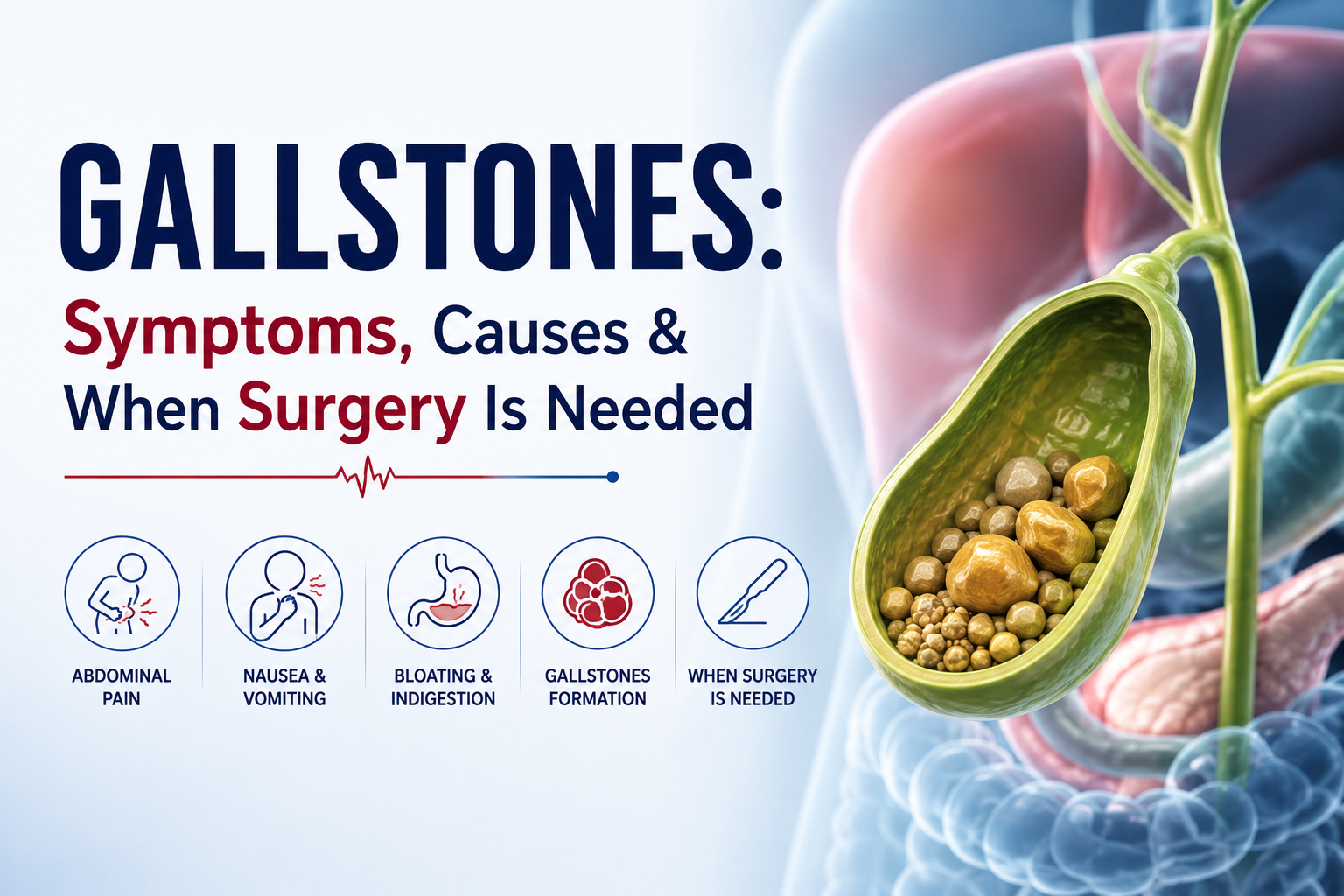
Gallstones: Symptoms, Causes & When Surgery Is Needed
- The Pitch Point
- 06 Aug 2026
Gallstones are hard, stone-like deposits that develop inside the gallbladder. Some people have gallstones without experiencing any symptoms, while others may develop sudden and severe abdominal pain that requires medical attention.
Gallstones are common, but ignoring repeated symptoms can sometimes lead to complications such as inflammation, infection or blockage of the bile ducts.
So, how do you know if your symptoms could be caused by gallstones—and when is surgery actually necessary?
Let’s take a closer look.
What Are Gallstones?
The gallbladder is a small, pear-shaped organ located beneath the liver. It stores and concentrates bile, a digestive fluid that helps the body digest fats.
Gallstones form when substances in bile, particularly cholesterol or bilirubin, become concentrated and harden into stones.
Gallstones can range from tiny particles to larger stones, and a person may have a single stone or several stones.
What Are the Symptoms of Gallstones?
Many people with gallstones have no symptoms at all. These are sometimes called “silent gallstones” and may not require treatment if they are not causing problems.
Symptoms usually occur when a stone blocks the normal flow of bile.
The most common symptom is biliary colic, which is typically experienced as sudden pain in the upper right or upper middle part of the abdomen.
Common symptoms include:
- Sudden or intense pain in the upper right abdomen
- Pain in the upper middle abdomen
- Pain that may spread to the right shoulder or back
- Pain after eating, particularly after a fatty meal
- Nausea
- Vomiting
- Bloating or indigestion
Gallstone pain can last from several minutes to a few hours.
If the pain is severe, persistent or repeatedly occurring, medical evaluation is important.
What Causes Gallstones?
Gallstones develop when there is an imbalance in the substances that make up bile.
1. Excess Cholesterol in Bile
Most gallstones are cholesterol stones.
If bile contains more cholesterol than it can keep dissolved, cholesterol can crystallize and gradually form stones.
2. Excess Bilirubin
Bilirubin is produced when red blood cells are broken down.
Certain conditions that cause increased bilirubin levels can increase the risk of pigment gallstones.
3. The Gallbladder Does Not Empty Properly
If the gallbladder does not empty completely or frequently enough, bile can become concentrated, increasing the chance of stone formation.
Who Is More Likely to Develop Gallstones?
Several factors can increase the risk, including:
- Increasing age
- Being overweight or obese
- Rapid weight loss
- A diet high in unhealthy fats and low in fibre
- Pregnancy
- Family history of gallstones
- Certain medical conditions
- Some medications
Having one or more risk factors does not mean that you will definitely develop gallstones.
Gallstones vs Other Types of Abdominal Pain
Gallstone pain can sometimes be confused with other digestive or abdominal conditions.
Pain caused by gallstones often occurs in the upper right or upper middle abdomen and may follow a heavy or fatty meal.
However, abdominal pain can have many causes, including acidity, ulcers, pancreatitis, liver conditions and other digestive problems.
Do not try to diagnose the cause based on pain location alone.
Persistent or severe abdominal pain should be evaluated by a doctor.
When Should You See a Doctor?
You should consult a doctor if you experience:
- Repeated episodes of upper abdominal pain
- Severe abdominal pain after meals
- Nausea or vomiting associated with abdominal pain
- Pain that spreads to the back or right shoulder
- Unexplained digestive symptoms that keep returning
Your doctor may recommend an ultrasound or other tests to determine whether gallstones are present.
When Are Gallstones Dangerous?
Gallstones can become more serious when they block the gallbladder or bile ducts.
Seek urgent medical attention if abdominal pain occurs with:
- Fever or chills
- Yellowing of the skin or eyes
- Severe or persistent abdominal pain
- Repeated vomiting
- Dark urine or unusually pale stools
- Significant weakness or feeling very unwell
These symptoms may indicate complications such as gallbladder inflammation, bile duct obstruction, infection or pancreatitis.
Do All Gallstones Need Surgery?
No.
If gallstones are discovered incidentally and are not causing symptoms, surgery may not always be necessary.
However, if gallstones are causing repeated pain or complications, your doctor may recommend treatment.
The decision depends on factors such as:
- Whether you have symptoms
- How frequently symptoms occur
- Whether the gallbladder is inflamed
- Whether a stone has blocked a bile duct
- Whether complications have developed
- Your overall health
When Is Gallbladder Surgery Recommended?
For people with symptomatic gallstones, the usual definitive treatment is removal of the gallbladder, known as a cholecystectomy.
Surgery may be recommended when gallstones cause:
Recurrent Gallstone Attacks
If you repeatedly experience painful episodes caused by gallstones, surgery may be recommended to prevent further attacks.
Acute Cholecystitis
A stone can block the gallbladder outlet and cause inflammation known as acute cholecystitis.
This can cause persistent upper abdominal pain, fever and tenderness and may require prompt treatment.
Bile Duct Stones
Sometimes a stone moves from the gallbladder into the common bile duct.
This can obstruct bile flow and may cause jaundice, infection or other complications.
Gallstone-Related Pancreatitis
A gallstone can block the area where the bile duct and pancreatic duct drain, potentially triggering inflammation of the pancreas.
This requires medical attention and may lead to a recommendation for gallbladder removal after the acute problem is managed.
What Is Laparoscopic Gallbladder Surgery?
Today, gallbladder removal is commonly performed using laparoscopic surgery, a minimally invasive surgical technique.
Instead of making one large incision, the surgeon typically makes several small incisions and uses a camera and specialised instruments to remove the gallbladder.
Potential advantages of laparoscopic surgery include:
- Smaller incisions
- Less postoperative discomfort compared with traditional open surgery in many patients
- Shorter hospital stay in many cases
- Faster return to normal activities
However, the suitability of laparoscopic surgery depends on the individual patient and the severity of the condition.
In some situations, a surgeon may recommend open surgery or convert a laparoscopic procedure to open surgery for safety.
What Happens After Gallbladder Removal?
The liver continues to produce bile even after the gallbladder is removed. Instead of being stored in the gallbladder, bile flows directly into the intestine.
Most people are able to return to a normal diet and routine after recovering from surgery.
Your surgeon will provide specific instructions regarding:
- Diet
- Physical activity
- Wound care
- Medicines
- Follow-up appointments
- Returning to work and normal activities
Recovery varies from person to person.
Can Gallstones Be Prevented?
There is no guaranteed way to prevent every gallstone.
However, healthy habits may help reduce the risk:
- Maintain a healthy weight.
- Avoid rapid, extreme weight loss.
- Eat a balanced diet with adequate fibre.
- Limit excessive intake of unhealthy fats.
- Stay physically active.
- Follow a healthy eating pattern consistently.
If you are trying to lose weight, gradual and sustainable weight loss is generally preferable to crash dieting.
The Bottom Line
Gallstones do not always cause symptoms, and not every person with gallstones needs surgery.
However, recurring abdominal pain, nausea after meals or other symptoms should not simply be ignored. When gallstones cause repeated attacks or complications, gallbladder removal may provide definitive treatment.
If you experience severe abdominal pain, fever, jaundice or persistent vomiting, seek medical attention promptly.
Consult a General & Laparoscopic Surgeon at Kuber Hospital
If you have been diagnosed with gallstones or are experiencing recurring upper abdominal pain, a surgical evaluation can help determine whether observation, further investigation or gallbladder surgery is appropriate.
The General & Laparoscopic Surgery Department at Kuber Hospital provides evaluation and surgical care for conditions including gallstones and other abdominal problems.
Don’t ignore recurring abdominal pain. Find out whether gallstones could be the cause and discuss the right treatment with a qualified surgeon.
This article is for general educational purposes and does not replace an individual medical consultation. Treatment decisions should be made by a qualified healthcare professional after evaluating the patient’s symptoms and medical condition.
Related News

Aging Gracefully: Gynecological Care After 50
Turning 50 is a milestone worth celebrating—a time of wisdom, experience, and new possibilities. But as your body evolves, so do your health needs, especially when it comes to gynecological care. Menopause, bone health, and sexual wellness take center stage, and staying proactive can make all the difference in aging gracefully. At Kuber Hospital & … Continue reading "Aging Gracefully: Gynecological Care After 50"
Read More

All About Allergies: Triggers, Symptoms & Management
Allergies are a common yet often misunderstood medical condition that can range from mild discomfort to life-threatening reactions. Understanding what causes allergies, how to recognize the symptoms, and the best ways to manage them can help you or your loved ones lead a healthier, more comfortable life. At Kuber Hospital & Urology Center, our experienced … Continue reading "All About Allergies: Triggers, Symptoms & Management"
Read More
Happy Patients!
Hear from our patients

I had the privilege of experiencing the outstanding care provided by the hospital staff during the recent visit. The team is truly exceptional—professional, compassionate, and attentive to every detail. Their dedication to patient well-being is evident in the way they go above and beyond to ensure comfort and support at all times.

JAGJOT KAUR
Patient
Very good hospital and they provide us good facilities and best treatment , staff is also very cooperative with us. Dr Meenakshi mam is very good in nature and very helpful and she also guide us during the whole journey of my pregnancy
Satish Dagar
Patients Family
Very good hospital, treatment of my father in law stone removal from kidney surgery was successful he is fit and fine. Released within two days. Reception mam davinder was very friendly and supportive. And overall staff behaviour is very good. Hospital is clean an proper hygiene is maintained. All required protocal are being followed.
Amrit Pandey
Patient
My experience is very wonderful. all nurse are very good & very wonderful. I like the sister biji banti and rinki the most. Dr Meenakshi has treated myself very well and given me very support in my full pregnancy period……
Thank you all staff & Dr Meenakshi so much
Manya Aggarwal
Patient
Experience here was superb. Kuber hospital serves and take care of their patients really well. Five stars for the treatment and Five stars for after surgery care.
Nishchal Joshi
Patient