
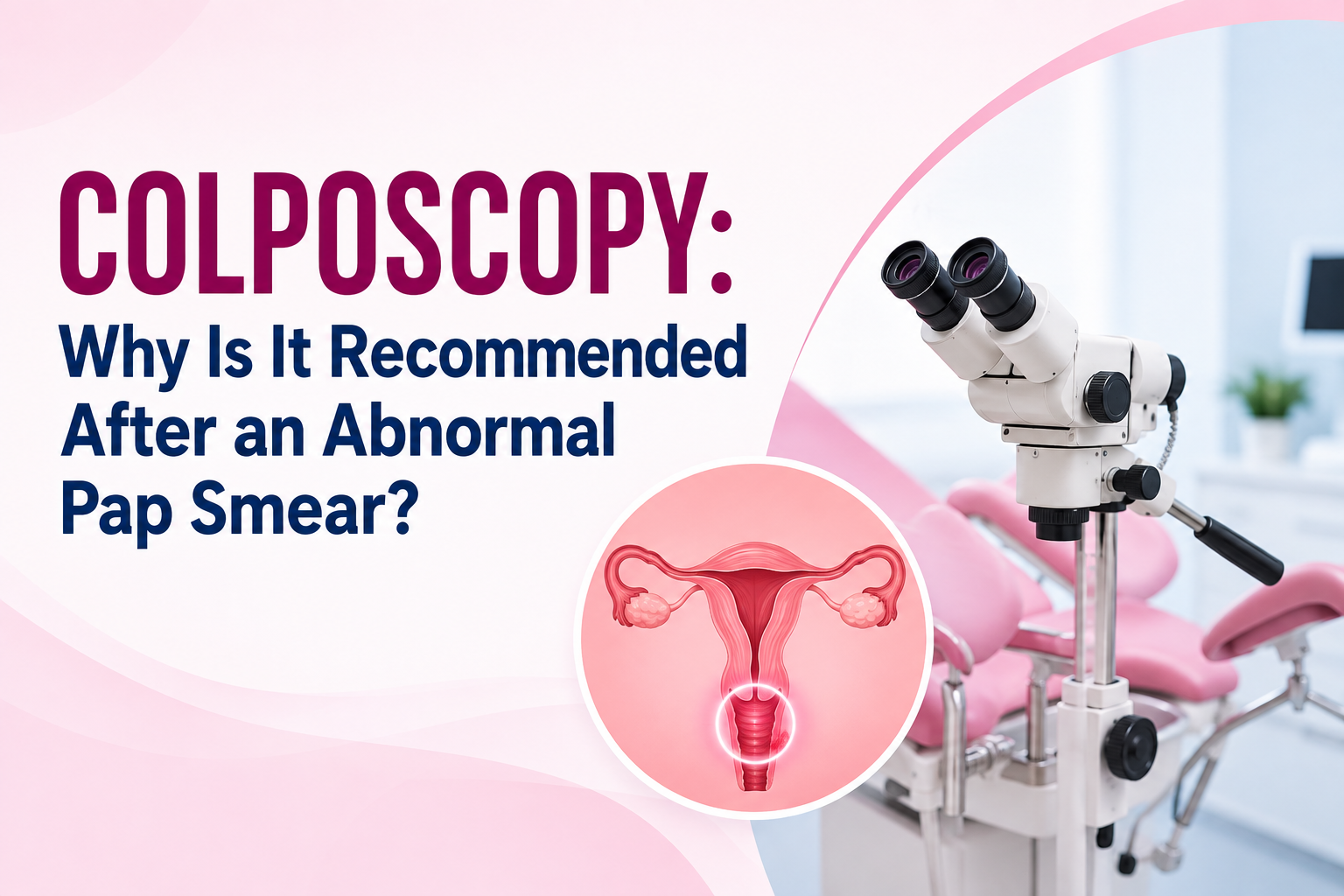
Colposcopy: Why Is It Recommended After an Abnormal Pap Smear?
- The Pitch Point
- 24 Jul 2026
Receiving an abnormal Pap smear result can be worrying, but an abnormal result does not mean that you have cervical cancer. In many cases, abnormal cervical cells are related to human papillomavirus (HPV) infection or mild changes that may resolve on their own.
Depending on your Pap smear and HPV results, your doctor may recommend a procedure called colposcopy.
But what exactly is a colposcopy, why is it recommended, and what should you expect during the procedure?
Let’s understand.
What Is a Colposcopy?
A colposcopy is a diagnostic procedure that allows a doctor to examine the cervix closely using a special magnifying instrument called a colposcope.
During the procedure, a speculum is used to gently open the vagina so the cervix can be viewed. A solution may be applied to the cervix to make abnormal areas easier to identify. The doctor then examines the cervix under magnification.
If an area looks abnormal, the doctor may take a small tissue sample, known as a biopsy, for examination in a laboratory.
Why Is Colposcopy Recommended After an Abnormal Pap Smear?
A Pap smear is a screening test. It looks for abnormal cells on the cervix, but it does not by itself provide a complete diagnosis.
When abnormal cells are detected, your doctor needs to determine:
- Whether the changes are minor or significant
- Whether HPV may be involved
- Whether there are precancerous changes
- Whether further monitoring is appropriate
- Whether treatment may be necessary
Colposcopy provides a closer examination of the cervix and, when a biopsy is performed, allows the tissue to be examined under a microscope.
The follow-up recommended after an abnormal Pap or HPV test depends on factors such as the current result, previous screening results, previous treatment for cervical abnormalities and individual risk factors. Some women may simply need repeat testing, while others may be advised to undergo colposcopy and biopsy.
Does an Abnormal Pap Smear Mean I Have Cancer?
No.
This is one of the most important things to understand.
Most people with abnormal cervical screening results do not have cervical cancer. Abnormal results may indicate HPV infection or early cervical cell changes that can sometimes disappear on their own or be treated before they become more serious.
The purpose of follow-up testing is to identify women who need closer monitoring or treatment—not to assume that every abnormal result is cancer.
What Can Cause an Abnormal Pap Smear?
An abnormal Pap result can occur for several reasons.
HPV Infection
Human papillomavirus (HPV) is a common infection. Certain high-risk types of HPV can cause changes in cervical cells and, if persistent, can contribute to cervical cancer.
Many HPV infections are temporary and clear naturally, but persistent high-risk HPV infection can increase the risk of significant cervical cell changes.
Mild Cervical Cell Changes
Some Pap results show minor abnormalities. These may not require immediate treatment and may instead be monitored depending on the overall risk assessment.
More Significant Cell Changes
Some results suggest a higher likelihood of precancerous changes. Examples include HSIL, ASC-H, AGC or AIS. Depending on the specific result and the patient’s history, colposcopy may be recommended to investigate further.
What Happens During a Colposcopy?
A colposcopy is generally performed by a trained gynaecologist.
The process usually involves:
Step 1: Positioning
You will lie on an examination table, similar to a routine pelvic examination.
Step 2: Speculum Examination
A speculum is gently inserted into the vagina to allow the doctor to see the cervix.
Step 3: Examination With the Colposcope
The colposcope remains outside the body. It provides magnification and a bright light so the doctor can examine the cervix more closely.
Step 4: Application of a Solution
A solution may be applied to the cervix to help highlight areas of abnormal tissue.
Step 5: Biopsy, If Required
If an area appears abnormal, the doctor may take a small tissue sample.
The sample is then examined by a pathologist to determine whether abnormal cells are present and, if so, how significant the changes are.
Is Colposcopy Painful?
For many women, colposcopy feels similar to a Pap smear or pelvic examination.
If a biopsy is taken, you may experience a brief pinching sensation or cramping. Some light bleeding or discharge can occur afterward.
If you are anxious about the procedure, tell your gynaecologist beforehand. Understanding what will happen can make the experience much more comfortable.
What Do Colposcopy Results Mean?
If a biopsy is performed, the tissue is examined for abnormal cervical cells.
One term you may hear is CIN, or cervical intraepithelial neoplasia. CIN describes abnormal cells on the surface of the cervix and is generally graded from 1 to 3.
- CIN 1: Mild changes that often resolve without treatment.
- CIN 2: Moderate changes that may require close monitoring or treatment depending on the individual situation.
- CIN 3: Severe abnormal changes that are considered precancerous and generally require treatment.
CIN is not the same as cervical cancer. However, higher-grade changes may have a greater chance of progressing to cancer if left untreated.
What Happens After Colposcopy?
The next step depends on the examination and biopsy results.
Your doctor may recommend:
- Routine follow-up
- Repeat HPV or Pap testing
- Additional monitoring
- Treatment to remove abnormal cervical tissue
- Further investigation if more serious abnormalities are identified
Treatment is not automatically required after every colposcopy. The appropriate approach depends on the results and your individual risk.
Can Colposcopy Detect Cervical Cancer?
Colposcopy can help identify areas of the cervix that look abnormal and guide biopsies.
However, a diagnosis of cervical cancer requires appropriate tissue examination and other diagnostic evaluation when necessary.
The major benefit of investigating abnormal screening results is that potentially serious cervical cell changes can be identified before they develop into invasive cancer.
Can You Have an Abnormal Pap Smear Without Symptoms?
Yes.
Cervical precancer and early cervical cancer may not cause noticeable symptoms. This is why regular cervical cancer screening and appropriate follow-up are important.
Do not wait for symptoms before following your doctor’s recommendation for additional testing.
What Should You Do After an Abnormal Pap Result?
If your Pap smear is abnormal:
Don’t panic.
Instead:
- Ask your doctor what your specific result means.
- Find out whether an HPV test was performed.
- Ask whether you need repeat testing or a colposcopy.
- Follow the recommended timeline for follow-up.
- Do not skip a recommended colposcopy simply because you feel well.
- Discuss any concerns about pregnancy, fertility or previous cervical procedures with your gynaecologist.
The correct follow-up depends on your individual results and medical history.
Why Timely Follow-Up Matters
An abnormal Pap smear is a signal to investigate further, not a diagnosis of cancer.
Colposcopy can help doctors examine the cervix more closely and, when necessary, obtain tissue for laboratory examination. This makes it an important part of the evaluation of certain abnormal cervical screening results.
Following your doctor’s recommendation can help detect significant cervical changes early, when they can often be monitored or treated before they become more serious.
Consult a Gynaecologist at Kuber Hospital
If you have received an abnormal Pap smear or HPV test result, don’t ignore the recommended follow-up.
The Gynaecology Department at Kuber Hospital can help evaluate abnormal cervical screening results and guide you through the appropriate next steps, including colposcopy when indicated.
An abnormal Pap smear is not necessarily cancer—but it is a reason to follow up. Early evaluation can make a meaningful difference.
Medical information in this article is for educational purposes and does not replace an individual consultation with a qualified gynaecologist.
Related News

Aging Gracefully: Gynecological Care After 50
Turning 50 is a milestone worth celebrating—a time of wisdom, experience, and new possibilities. But as your body evolves, so do your health needs, especially when it comes to gynecological care. Menopause, bone health, and sexual wellness take center stage, and staying proactive can make all the difference in aging gracefully. At Kuber Hospital & … Continue reading "Aging Gracefully: Gynecological Care After 50"
Read More

All About Allergies: Triggers, Symptoms & Management
Allergies are a common yet often misunderstood medical condition that can range from mild discomfort to life-threatening reactions. Understanding what causes allergies, how to recognize the symptoms, and the best ways to manage them can help you or your loved ones lead a healthier, more comfortable life. At Kuber Hospital & Urology Center, our experienced … Continue reading "All About Allergies: Triggers, Symptoms & Management"
Read More
Happy Patients!
Hear from our patients

I had the privilege of experiencing the outstanding care provided by the hospital staff during the recent visit. The team is truly exceptional—professional, compassionate, and attentive to every detail. Their dedication to patient well-being is evident in the way they go above and beyond to ensure comfort and support at all times.

JAGJOT KAUR
Patient
Very good hospital and they provide us good facilities and best treatment , staff is also very cooperative with us. Dr Meenakshi mam is very good in nature and very helpful and she also guide us during the whole journey of my pregnancy
Satish Dagar
Patients Family
Very good hospital, treatment of my father in law stone removal from kidney surgery was successful he is fit and fine. Released within two days. Reception mam davinder was very friendly and supportive. And overall staff behaviour is very good. Hospital is clean an proper hygiene is maintained. All required protocal are being followed.
Amrit Pandey
Patient
My experience is very wonderful. all nurse are very good & very wonderful. I like the sister biji banti and rinki the most. Dr Meenakshi has treated myself very well and given me very support in my full pregnancy period……
Thank you all staff & Dr Meenakshi so much
Manya Aggarwal
Patient
Experience here was superb. Kuber hospital serves and take care of their patients really well. Five stars for the treatment and Five stars for after surgery care.
Nishchal Joshi
Patient