
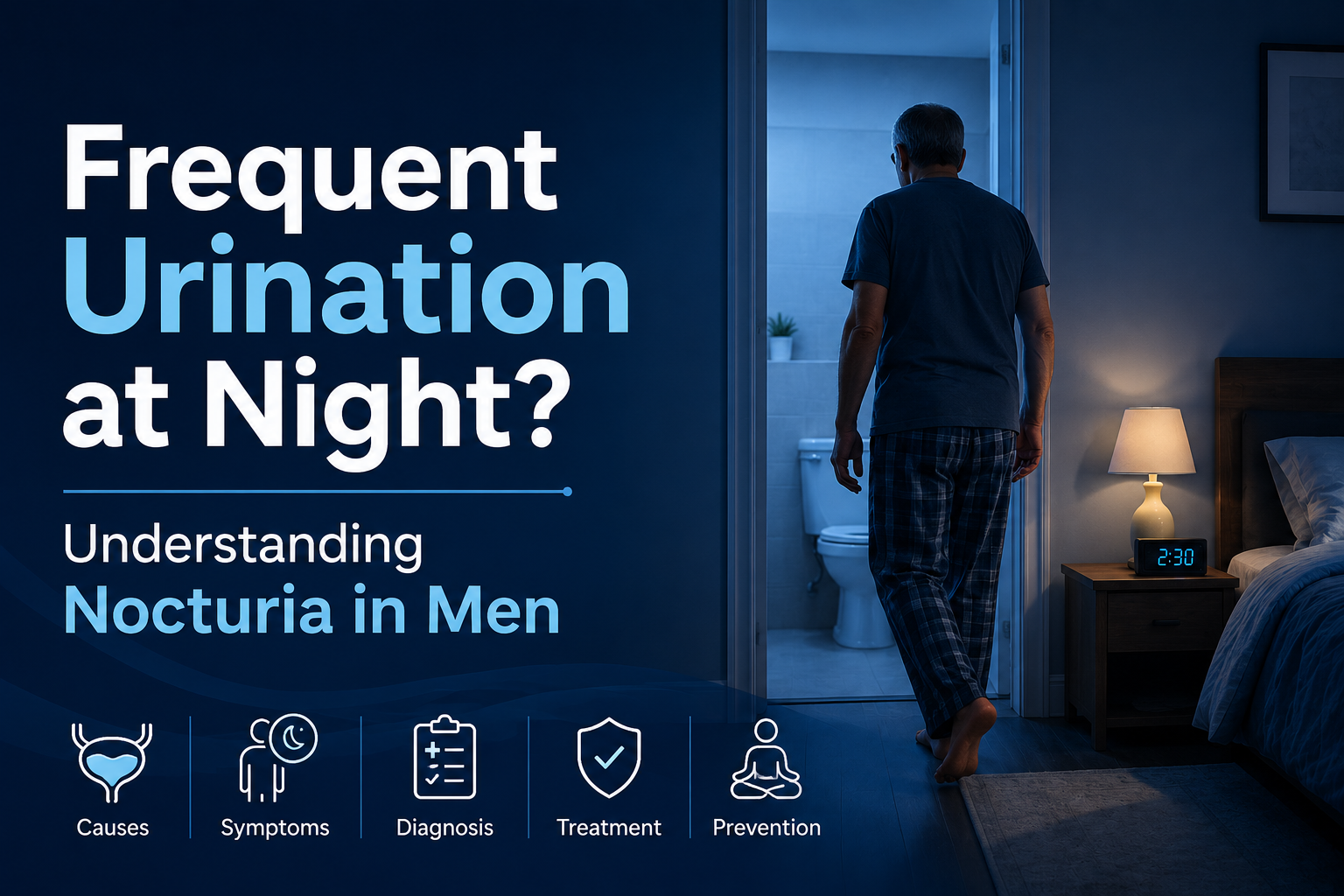
Frequent Urination at Night? Understanding Nocturia in Men
- The Pitch Point
- 12 Jul 2026
Waking up once at night to urinate may not seem unusual. But if you regularly wake up two or more times every night to use the bathroom, it could be nocturia.
Nocturia is a condition in which a person wakes from sleep one or more times during the night to urinate. It becomes more common with age, particularly among men, but frequent nighttime urination should not simply be dismissed as a normal part of getting older.
Poor sleep caused by repeated bathroom visits can affect energy levels, concentration, mood and overall quality of life. In some cases, nocturia can also be a sign of an underlying medical condition that needs attention.
What Is Nocturia?
Nocturia means waking up during the night because you need to urinate.
It is different from simply producing more urine at night. For example, some men may wake up because of poor sleep, anxiety or another condition and then decide to use the bathroom. Others may wake specifically because their bladder is full.
The underlying cause can vary from person to person, which is why identifying the reason behind nighttime urination is important.
How Often Is Nighttime Urination Considered a Problem?
There is no single number that defines problematic nocturia for every person.
However, if you are regularly waking up two or more times every night to urinate, especially if it is disturbing your sleep or affecting your daily activities, it is worth discussing with a doctor.
You should pay particular attention if nighttime urination is accompanied by other urinary symptoms.
Common Causes of Frequent Urination at Night in Men
1. Enlarged Prostate
One of the common causes of urinary symptoms in older men is benign prostatic hyperplasia (BPH), or an enlarged prostate.
As the prostate grows, it can put pressure on the urethra and interfere with the normal flow of urine.
Men with an enlarged prostate may experience:
- Frequent urination
- Waking several times at night to urinate
- Difficulty starting urination
- A weak or interrupted urine stream
- A feeling that the bladder has not completely emptied
- Urgency to urinate
Not every man with these symptoms has BPH, so a proper evaluation is important.
2. Drinking Too Many Fluids Before Bed
Drinking large amounts of water, tea, coffee or other fluids close to bedtime can increase urine production during the night.
Caffeinated beverages can be particularly relevant because caffeine may increase urine production and can also interfere with sleep.
Try to avoid excessive fluid intake in the few hours before going to bed, while still maintaining adequate hydration throughout the day.
3. Diabetes
High blood sugar can cause the kidneys to remove excess glucose through urine. This can increase urine production and may result in frequent urination, including during the night.
If nighttime urination is accompanied by excessive thirst, unexplained weight changes, increased hunger or fatigue, it is important to speak with a doctor.
4. Urinary Tract Problems
Urinary tract infections and other urinary conditions can cause increased frequency and urgency.
Symptoms such as burning while urinating, cloudy or unusual-smelling urine, pelvic discomfort or blood in the urine should not be ignored.
5. Sleep Disorders
Sometimes the problem may not begin with the bladder.
Conditions such as sleep apnea can disrupt normal sleep patterns and may be associated with increased nighttime urination.
If you snore loudly, experience interrupted breathing during sleep or feel excessively tired during the day, mention these symptoms to your doctor.
6. Certain Medications
Some medicines, particularly diuretics or “water pills,” increase urine production. Depending on when they are taken, they may contribute to nighttime urination.
Never change or stop prescribed medication without discussing it with your doctor.
7. Other Health Conditions
Heart, kidney and other health conditions can sometimes contribute to nocturia.
For this reason, persistent nighttime urination should be considered in the context of your overall health rather than treated as an isolated symptom.
When Should Men See a Urologist?
Consider consulting a urologist if:
- You regularly wake up multiple times every night to urinate
- Your urinary symptoms are getting worse
- You have difficulty starting urination
- Your urine stream has become weak
- You frequently feel that your bladder has not emptied completely
- You experience sudden or strong urinary urgency
- You have pain or burning while urinating
- You notice blood in your urine
- Your symptoms are affecting your sleep or daily life
Early evaluation can help identify the underlying cause and determine the appropriate treatment.
How Is Nocturia Diagnosed?
Your doctor may begin by asking about your symptoms, medical history, fluid intake and medications.
You may also be asked to maintain a bladder diary, recording:
- When and how much you drink
- When you urinate
- How much urine you pass
- How many times you wake during the night
Depending on your symptoms, your doctor may recommend tests such as a urine test, blood sugar testing, kidney function tests, prostate evaluation or other investigations.
The exact tests depend on the suspected cause.
Can Nocturia Be Managed?
Treatment depends on why you are waking up at night.
Depending on the underlying cause, management may include lifestyle changes, treatment of an underlying medical condition, medication or treatment for prostate-related urinary problems.
Some simple measures may also help:
- Reduce excessive fluid intake close to bedtime.
- Limit caffeine and alcohol, particularly in the evening.
- Empty your bladder before going to bed.
- Discuss the timing of diuretic medicines with your doctor if applicable.
- Maintain a healthy weight and regular physical activity.
- Manage conditions such as diabetes and high blood pressure appropriately.
These measures may help, but persistent symptoms should still be evaluated rather than managed solely at home.
Don’t Ignore Persistent Nighttime Urination
Waking occasionally to urinate may not be a cause for concern. But if you are repeatedly waking throughout the night, losing sleep and feeling tired during the day, it is worth finding out why.
For men, nocturia can sometimes be associated with prostate problems, urinary conditions, diabetes, sleep disorders or other health issues. Finding and treating the underlying cause is more important than simply accepting frequent nighttime urination as a normal part of ageing.
If frequent nighttime urination is affecting your sleep or quality of life, consider speaking with a qualified urologist for an appropriate evaluation.
When to Seek Urgent Medical Attention
Seek prompt medical care if nighttime urinary symptoms occur with inability to urinate, significant blood in the urine, severe pain, fever or other concerning symptoms.
Kuber Hospital — Urology Care
If you are experiencing frequent nighttime urination, weak urine flow, difficulty urinating or other urinary symptoms, a urological evaluation can help determine the underlying cause and appropriate treatment.
Book an appointment with the Urology Department at Kuber Hospital to discuss persistent urinary symptoms.
Related News

Aging Gracefully: Gynecological Care After 50
Turning 50 is a milestone worth celebrating—a time of wisdom, experience, and new possibilities. But as your body evolves, so do your health needs, especially when it comes to gynecological care. Menopause, bone health, and sexual wellness take center stage, and staying proactive can make all the difference in aging gracefully. At Kuber Hospital & … Continue reading "Aging Gracefully: Gynecological Care After 50"
Read More

All About Allergies: Triggers, Symptoms & Management
Allergies are a common yet often misunderstood medical condition that can range from mild discomfort to life-threatening reactions. Understanding what causes allergies, how to recognize the symptoms, and the best ways to manage them can help you or your loved ones lead a healthier, more comfortable life. At Kuber Hospital & Urology Center, our experienced … Continue reading "All About Allergies: Triggers, Symptoms & Management"
Read More
Happy Patients!
Hear from our patients

I had the privilege of experiencing the outstanding care provided by the hospital staff during the recent visit. The team is truly exceptional—professional, compassionate, and attentive to every detail. Their dedication to patient well-being is evident in the way they go above and beyond to ensure comfort and support at all times.

JAGJOT KAUR
Patient
Very good hospital and they provide us good facilities and best treatment , staff is also very cooperative with us. Dr Meenakshi mam is very good in nature and very helpful and she also guide us during the whole journey of my pregnancy
Satish Dagar
Patients Family
Very good hospital, treatment of my father in law stone removal from kidney surgery was successful he is fit and fine. Released within two days. Reception mam davinder was very friendly and supportive. And overall staff behaviour is very good. Hospital is clean an proper hygiene is maintained. All required protocal are being followed.
Amrit Pandey
Patient
My experience is very wonderful. all nurse are very good & very wonderful. I like the sister biji banti and rinki the most. Dr Meenakshi has treated myself very well and given me very support in my full pregnancy period……
Thank you all staff & Dr Meenakshi so much
Manya Aggarwal
Patient
Experience here was superb. Kuber hospital serves and take care of their patients really well. Five stars for the treatment and Five stars for after surgery care.
Nishchal Joshi
Patient